Cabin by Date Three: How Fast-Forward Dating Became America's New Relationship Speed Test

Photo: CGP Grey, CC BY 2.0, via Wikimedia Commons
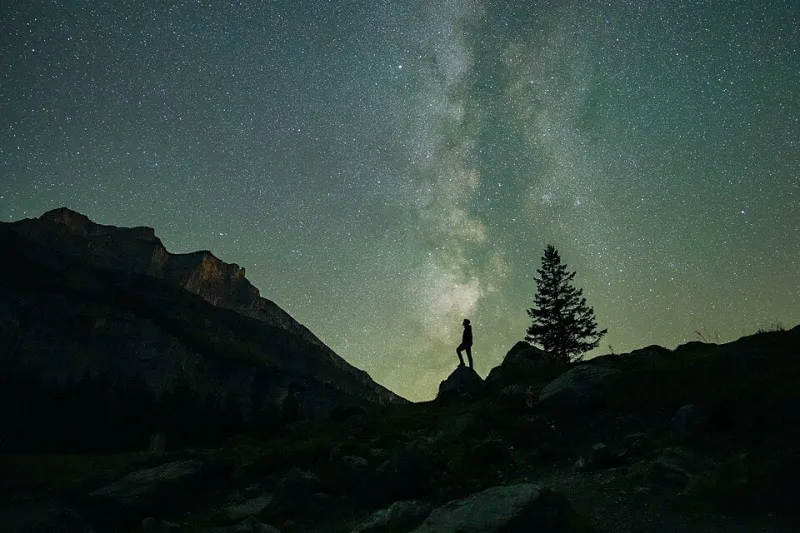
There was a time when the third date meant dinner, maybe a movie, and a carefully calculated goodnight kiss. Now? A growing number of American singles are skipping the appetizer phase entirely and heading straight for a weekend in a cabin two hours outside of Asheville, or splitting a festival pass in Austin before they've even defined what they are.
Call it fast-forward dating. And whether it sounds thrilling or terrifying probably says a lot about how your last relationship went.
The Timeline Is Getting Compressed — On Purpose
The traditional arc — coffee, dinner, drinks, meet the friends, meet the family, weekend away — took months. Today's dating app generation has watched enough relationships stall in the 'talking stage' to know that three-hour Thursday dinners don't reveal much. A 48-hour trip does.
There's a logic to it. You learn how someone handles a delayed flight, a bad GPS route, a hotel with thin walls. You see them before coffee. You find out if they're a 'let's wing it' person or a 'I made a spreadsheet' person. That's data you'd normally need six months to collect.
Younger daters especially — many of whom came of age socializing online before meeting in person — treat the trip-date less like a leap of faith and more like the natural next step after weeks of daily texting and FaceTime. The connection already exists. The trip just moves it offline.
The Rewards: Real Intimacy, Real Fast
When a trip-date works, it works spectacularly. Shared experiences — a hike that went sideways, a roadside diner discovery, getting caught in the rain in Moab — build bonding faster than any number of craft cocktails. Couples who survive the weekend often report feeling months ahead of schedule, like they skipped the small talk tax entirely.
There's also something to be said for the low-stakes honesty of travel. Nobody's performing at 7 a.m. in a rental car outside Reno.
The Risks: When Accelerated Becomes Artificial
Here's the flip side. Intensity isn't intimacy. A whirlwind weekend manufactures closeness — novelty, adrenaline, forced proximity — that can masquerade as compatibility. Some of the strongest 'we just clicked' connections dissolve the moment both people return to their regular lives and realize the chemistry needed a road trip to survive.
There's also the safety and financial angle. Splitting a $300 Airbnb with someone you've known for three weeks is a real commitment of money, time, and personal security. And if it goes badly? You're 200 miles from home with someone who's suddenly a stranger.
Romantic or Reckless? Five Questions to Ask First
- Have you video chatted? A trip with someone you've only texted is a gamble. A trip with someone you've seen on a two-hour FaceTime is a plan.
- Can you afford to lose the money? Book refundable. Split costs. If either of you would resent the expense, the trip is too soon.
- Does someone know where you are? Share your location with a friend. Non-negotiable, especially for the first overnight.
- Have you had an awkward moment yet? If every interaction so far has been effortless, you haven't seen the real person. A minor disagreement before the trip is actually a good sign.
- Are you both running from something? Fast-forward dating is a favorite tool of people who don't want to sit still with their own thoughts. Make sure the trip is about them, not about distraction.
The Verdict
The third date rule didn't die because Americans got reckless. It died because we got efficient — and a little impatient with timelines that were never designed around apps, long-distance matches, and limited PTO days. A weekend trip by date three isn't automatically a red flag. It's a high-bandwidth way to learn the truth fast.
Just go in with eyes open, a separate hotel room booked as a backup, and the understanding that a great weekend is a promising start — not a relationship.