Why the City You Live In Might Be the Biggest Obstacle Between You and Your Person
Let's say you've done the work. Your profile is genuinely good — real photos, a bio with actual personality, the kind of opener that gets responses. You're showing up, swiping thoughtfully, and still coming up empty. No sparks, no second dates, no one who quite fits.
Before you spiral into a full self-audit, consider this: it might not be you. It might be your zip code.
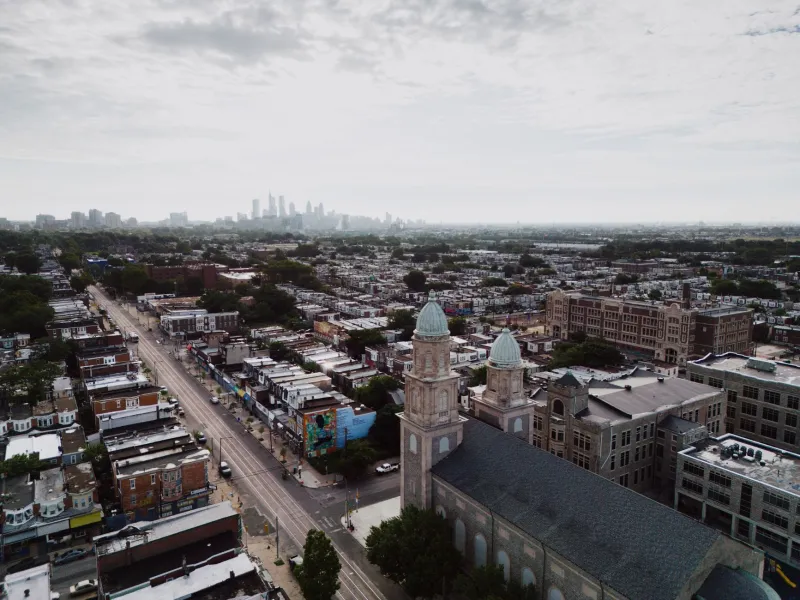
Where you live shapes your dating life in ways that are deeply underappreciated. The city you call home isn't just a backdrop — it's an active participant in your romantic outcomes, bringing its own demographic quirks, cultural norms, and statistical realities to every match you make.
The Numbers Nobody Talks About
Dating apps feel like they give you access to everyone, everywhere. But in practice, you're working from a local pool — and that pool is not randomly distributed.
Gender ratios vary significantly across US cities. According to census data, cities like New York, Washington D.C., and Philadelphia have notably more single women than single men, while metros like San Jose, San Francisco, and Seattle tilt the other direction. If you're a straight woman in the Bay Area looking for a long-term partner, you're statistically navigating a more competitive field than your friend doing the same thing in Atlanta. That's not a personal failing. That's geography.
Age distribution matters too. College towns skew young — great if you're in your twenties, potentially frustrating if you're 38 and looking for someone who's done the work on themselves. Retirement-heavy metros in Florida or Arizona have a very different demographic texture than Chicago or Denver. The median age of your city's dating pool is a real variable, and most people never factor it in.
Then there's education and career concentration. Cities built around specific industries — tech in Seattle and Austin, finance in New York, government in D.C., entertainment in Los Angeles — attract specific personality types and lifestyle priorities. If your ideal partner values work-life balance and outdoor hobbies, you might find that harder to locate in a city where 70-hour workweeks are considered a personality trait.
Cultural Norms Are a Dating Variable Too
Beyond raw demographics, cities have dating cultures — unspoken norms about how people meet, how quickly things move, and what commitment actually looks like.
New York has a reputation for casual, high-volume dating where exclusivity conversations happen later than most people expect. LA is known for a culture of perpetual optionality — everyone's waiting to see what else comes along. The South tends toward faster relationship escalation and stronger family-involvement expectations. The Midwest often has more direct communication styles around romantic intent.
None of these are better or worse in absolute terms — they're just different. But if you grew up in Nashville and moved to San Francisco, you might be bringing a relationship timeline that genuinely doesn't match the local default. That mismatch can feel like incompatibility when it's actually just a cultural calibration issue.
The "Perfect on Paper" Problem Gets Worse in Certain Cities
Here's where things get genuinely tricky. Some combinations of traits are simply rarer in certain geographic markets. If you're looking for someone who is, say, an outdoors-loving intellectual who wants kids and doesn't drink — that person exists everywhere, but their statistical frequency varies enormously by city.
In Denver or Portland, the outdoors piece is easy. In New York or Boston, the intellectual piece is abundant. But the full combination? That's where city-specific scarcity becomes real. You're not looking for a unicorn — you're looking for a specific kind of person who may just happen to cluster in cities you don't live in.
This is what researchers call a "thin market" problem. It's not that compatible people don't exist. It's that your local pool might not contain enough of them for a statistically comfortable search. Online dating helps, but it doesn't fully solve this — most people still filter by proximity, which means your city's demographics are still doing a lot of work behind the scenes.
What You Can Actually Do About It
Knowing that your city is a factor doesn't leave you helpless. There are real, practical adjustments that can meaningfully change your outcomes.
Expand your radius more aggressively than feels comfortable. Most people default to a 10-15 mile radius, which in dense cities might actually be quite limiting. Pushing that out — even to 30 or 40 miles — can open up meaningfully different pools. Yes, logistics matter. But a 45-minute drive is a much smaller obstacle than it feels at the beginning.
Consider whether your dealbreakers are city-specific. Sometimes the things we've decided are non-negotiable are actually responses to the people we've been meeting locally. If you've decided you can't date someone who works in finance, but you live in Manhattan, you might be eliminating a huge swath of otherwise compatible people based on a reaction to a type rather than a genuine value mismatch.
Use app features that surface compatibility over proximity. Platforms like Tindr.site allow you to filter and connect based on shared values and interests, not just distance. Leaning into those features — really reading profiles, engaging with specifics — helps you find the outliers in your local pool who don't fit the dominant demographic mold.
Take a hard look at relocation as a real variable. This sounds extreme, but it's worth at least thinking through. If you're in a city primarily for career reasons and you're consistently finding the dating pool misaligned with what you want, that's a legitimate data point. A lot of people find that moving — even to a nearby city — dramatically changes their romantic landscape.
Attend events and spaces that self-select for your type. Apps give you breadth, but real-world environments give you concentration. If you're looking for someone who values fitness, community, and intellectual curiosity, a book club at a running store is going to be a better environment than a generic happy hour. Get specific about where your people actually congregate in your city.
The Bigger Reframe
None of this is about lowering your standards. It's about understanding that compatibility is partly a statistical game, and the statistics are shaped by where you live. When you know that, you stop internalizing every missed connection as a personal failure and start thinking more strategically about how to work with — or around — your local market.
The right person for you almost certainly exists. The question is whether you're positioning yourself to find them — and whether you're accounting for the city-shaped variables that are quietly influencing every swipe.