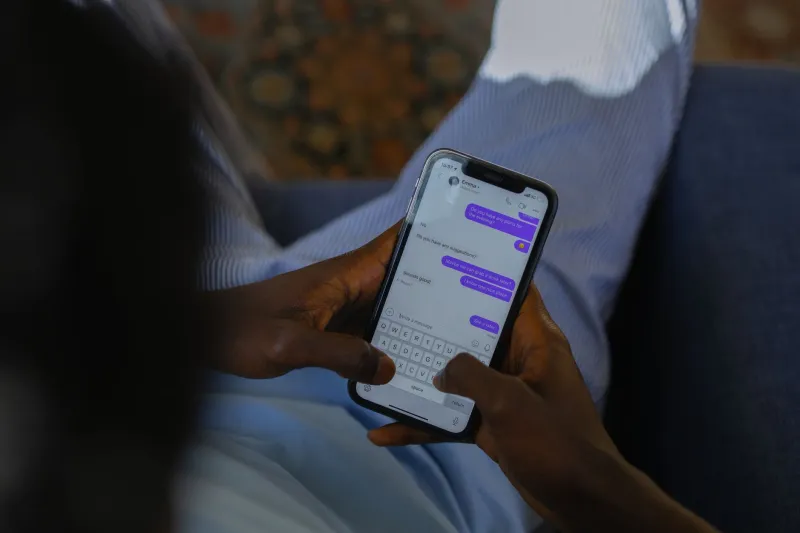
Swipe Less, Connect More: The Counterintuitive Case for Logging Off to Level Up Your Dating Life

Picture this: It's 11 p.m. on a Tuesday, you've been swiping for forty-five minutes, and somewhere around profile number sixty, you realize you can't actually remember why you passed on the last ten people. They all kind of blurred together. Their photos, their bios, their job titles — just one long, indistinguishable scroll.
If that sounds familiar, you've officially hit the swipe fatigue trap. And you're not alone.
Millions of singles across the US are stuck in this exact cycle — logging on out of habit, swiping without intention, and then wondering why their matches never seem to go anywhere meaningful. The answer, more often than not, isn't your photos or your opening line. It's that your brain is simply too worn out to make good decisions.
Your Brain on Endless Swiping
There's a well-documented psychological phenomenon called decision fatigue — the idea that the quality of our choices deteriorates the more decisions we're forced to make in a row. Judges give harsher rulings later in the day. Shoppers make worse purchasing decisions after a long trip through the store. And yes, daters start swiping right on people they'd have immediately passed on if they'd opened the app fresh.
Researchers have found that when we're mentally depleted, we tend to default to one of two extremes: either saying yes to almost everything (because evaluating each option feels like too much work) or going into full reject mode just to feel some sense of control. Neither approach is particularly great for finding an actual connection.
On a platform like Tindr.site, where every swipe is supposed to be the start of something real, bringing a foggy, fatigued brain to the table is basically setting yourself up to miss the people who might genuinely matter.
The Paradox of Too Many Choices
Here's something that doesn't get talked about enough in dating culture: having unlimited options doesn't make you more likely to find love. It often makes you less likely.
Psychologist Barry Schwartz coined the term "the paradox of choice" to describe exactly this — when we have too many options, we become paralyzed, less satisfied with what we choose, and more prone to second-guessing ourselves. Sound familiar?
Dating apps, by design, offer an almost infinite supply of potential matches. That's genuinely exciting at first. But after a while, it creates a weird mental trap where no one ever feels quite enough because there's always another profile waiting just one swipe away. You start treating real human beings like items in a never-ending catalog, and your standards — paradoxically — both rise and fall at the same time. You hold out for perfection while simultaneously lowering the bar for what actually gets your attention.
The result? A lot of shallow matches, a lot of dead-end conversations, and a creeping sense that dating apps just don't work.
What Actually Happens When You Step Away
Ask anyone who's taken a deliberate break from dating apps and then returned — the experience is almost universally the same. Everything feels sharper.
Take Marcus, 31, from Chicago, who deleted his apps for six weeks after a particularly brutal stretch of first dates that went nowhere. "I came back and it was like I could actually see people again," he said. "Before, I was just swiping on autopilot. After the break, I was reading bios more carefully, thinking about whether someone's energy actually matched mine. I matched with fewer people, but the conversations were way better."
Or Priya, 27, from Austin, who took a month off after noticing she was swiping right on guys she'd have zero interest in meeting, just to feel like she was "doing something." "The break reminded me what I actually wanted," she said. "I came back with a clearer head and ended up going on a date with someone I probably would have scrolled past before. We've been together eight months."
These aren't flukes. When you remove yourself from the constant noise of the apps, your brain gets a chance to recalibrate. You remember what genuinely interests you. You stop reacting and start choosing.
How to Take a Break That Actually Works
Not all breaks are created equal. Rage-quitting the app after a bad date and then redownloading it three days later because you're bored isn't a strategic reset — it's just drama. Here's how to make your time off actually count.
Set a real timeline. Two weeks is a minimum. Four to six weeks is ideal. Tell yourself you're not checking in "just to see" — that defeats the whole point. Delete the app from your phone if you need to make it official.
Use the time with intention. This isn't about moping or swearing off romance forever. It's about reconnecting with who you are outside of the swipe cycle. Pick up that hobby you've been putting off. Spend time with friends. Go to that concert or farmers market or trivia night you keep seeing on Instagram. Real-world social experiences remind you how connection actually feels — which makes you way better at recognizing it online.
Reflect on your patterns. Before you go back, take an honest look at your recent dating history. Are you consistently attracted to the same type of person, even when that type hasn't worked out for you? Are there patterns in the matches that fizzled? A break is a good time to get curious about these things without the pressure of an active queue.
Return with a fresh profile. When you do come back, treat it like a new beginning. Update your photos. Revisit your bio. Set a daily swipe limit — some people swear by capping themselves at ten to fifteen swipes per session — so you stay present and intentional rather than slipping back into autopilot mode.
Quality Over Quantity, Every Single Time
Here's the truth that dating culture in America doesn't always make room for: more swiping is not the same as more effort. Spending three focused, intentional hours a week on your dating life will almost always outperform thirty hours of mindless scrolling.
The goal on Tindr.site — and really, the whole point of any dating platform worth your time — isn't to rack up the most matches. It's to find the right match. And that requires showing up as your sharpest, most self-aware self. Decision fatigue makes that basically impossible.
So if you're feeling burned out, scattered, or like the apps just aren't delivering — before you overhaul your photos or rewrite your bio for the fifth time, consider the possibility that what you actually need is to close the app for a while.
Your future match will still be there when you get back. And you'll be in a much better place to recognize them.