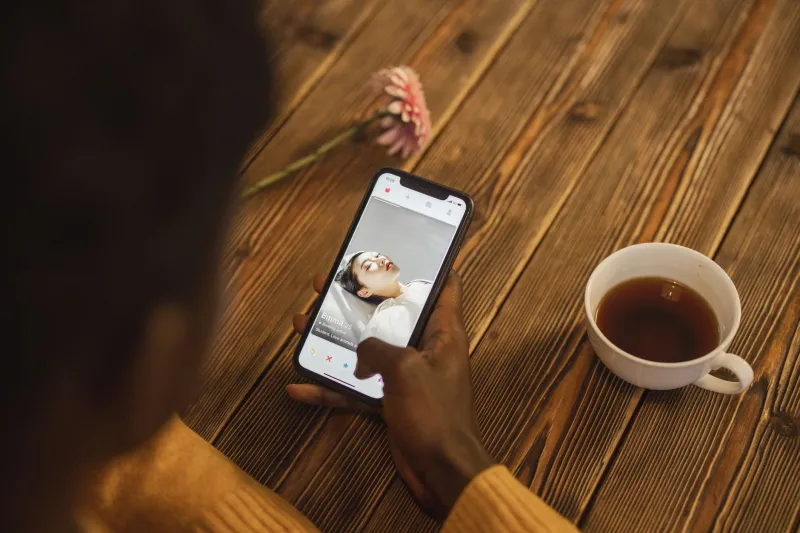
What Your Brain Looks Like After Three Months Away From Dating Apps — And Why It Changes Everything

You've been swiping for months. Maybe years. And somewhere along the way, the whole thing started feeling less like dating and more like scrolling through a catalog you never actually order from. Sound familiar? That's not just burnout talking — that's your brain sending you a very specific signal.
Here's the thing nobody tells you when you first download a dating app: the same neurological machinery that makes swiping so addictive is also the exact machinery you need to recognize real compatibility. And the more you swipe, the more that machinery gets gummed up.
The Dopamine Loop You Didn't Sign Up For
Every time you get a new match, your brain releases a small hit of dopamine — the same neurotransmitter involved in gambling, social media likes, and basically every other thing humans struggle to put down. That feels good, obviously. But dopamine isn't a reward for finding something meaningful. It's a reward for novelty.
This is where things get sneaky. Over time, your brain starts chasing the hit rather than the actual goal. You're not swiping to find a partner anymore — you're swiping to feel the micro-rush of a new match. The process becomes the point, and the person on the other side of the screen becomes almost incidental.
Research on what psychologists call "choice overload" backs this up pretty hard. When people are presented with too many options, they don't get better at choosing — they get worse. A now-famous study on jam sampling at a grocery store found that shoppers offered 24 varieties were far less likely to actually buy any jam than those offered just 6. Dating apps are essentially a 24-jam situation, every single day, forever.
What Heavy Swiping Does to Decision Quality
Here's the neurological reality: your prefrontal cortex — the part of your brain responsible for long-term thinking, nuanced judgment, and weighing complex social cues — gets progressively fatigued by rapid-fire evaluation. Psychologists call this decision fatigue, and it's well-documented in everything from courtroom sentencing patterns to medical diagnoses.
When you're deep in a swiping session, you're not using your full cognitive toolkit. You're operating on heuristics — mental shortcuts. Attractive photo? Swipe right. Weird hobby in the bio? Swipe left. It's fast, it feels decisive, but it's actually a really shallow form of human assessment.
The deeper problem is that this habit doesn't stay on the app. After enough months of swipe-based evaluation, your brain starts applying those same shortcuts to real human beings — on dates, in conversations, even in relationships. You become a worse judge of people overall, not just digitally.
What Actually Happens When You Log Off for Three Months
Three months isn't an arbitrary number. It's roughly the timeframe researchers associate with meaningful neurological recalibration in habit-based behaviors. You're not going cold turkey forever — you're giving your brain's reward system time to reset its baseline.
In the first few weeks, most people report feeling restless, even anxious. That's withdrawal from the dopamine loop, and it's completely normal. Your brain is used to constant novelty input, and suddenly the feed is gone.
By weeks four through six, something interesting tends to happen. People report becoming more present in everyday social interactions. A conversation with a stranger at a coffee shop starts to feel more interesting. You notice things about people — their humor, their nervous habits, the way they light up talking about something they love — that you'd been too distracted to catch before.
By the three-month mark, your evaluation criteria tend to shift in meaningful ways. People who take extended breaks from dating apps consistently report that they become more attracted to personality-driven qualities and less fixated on the kind of surface-level aesthetics that dominate profile photos. Your brain has essentially recalibrated what counts as attractive.
The Compatibility Reset
One of the quieter benefits of a proper digital detox is what it does to your self-awareness. When you're not constantly comparing yourself to an endless stream of other singles or measuring your worth in match rates, you start to get a clearer picture of what you actually want — not what looks good on a profile.
That clarity matters enormously when you do return to dating. People who come back after a meaningful break tend to write better bios (more honest, less performative), send more thoughtful first messages, and — critically — have more patience for the slow burn of getting to know someone. They've essentially re-learned that compatibility isn't something you assess in half a second from a photo. It's something that reveals itself over time.
How to Make the Break Actually Work
Logging off doesn't automatically fix anything if you spend the three months doom-scrolling Instagram instead. The point is to reduce novelty-seeking behavior overall and give yourself space to re-engage with real-world social experiences.
A few things that actually help during a dating app break:
- Get back into social environments with zero romantic agenda. Trivia nights, hiking groups, volunteer work — anything that puts you around people without the pressure of a match rate.
- Journal about what you actually want. Not in a cheesy way — just honest notes about what's felt missing in your past relationships and what's consistently made you happy.
- Notice who you're attracted to in real life. Not to pursue them necessarily, but to recalibrate your gut instincts away from photo-based assessment.
- Give yourself permission to be bored. Boredom is uncomfortable, but it's also where a lot of self-knowledge lives.
Coming Back With a Different Brain
When you do return to an app like Tindr.site after a real break, the experience tends to feel noticeably different. Profiles that would have gotten an instant right-swipe a year ago might not do much for you now. And that's actually a good thing — it means your filters are working again.
You'll likely swipe less overall, but the connections you do pursue will feel more intentional. You'll be more likely to actually message someone, more willing to move a conversation toward a real date, and more capable of recognizing genuine chemistry when it shows up.
The irony of dating apps is that using them less strategically often means getting more out of them. Your brain is an incredible compatibility-detection machine — it just needs the right conditions to do its job. Three months of quiet might be exactly what it takes to hear what it's been trying to tell you all along.