When Perfect on Paper Means Nothing in Person: The Compatibility Myth Explained
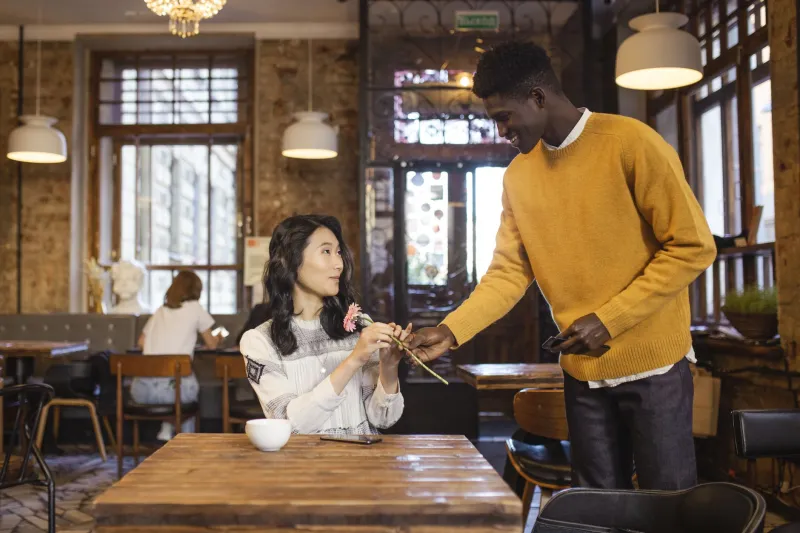
You've been there. You matched with someone whose profile read like it was written specifically for you. Same taste in music, same weekend hobbies, same dream of owning a golden retriever someday. You showed up to the coffee shop practically buzzing with excitement — and then walked away an hour later wondering if you'd accidentally sat across from your own reflection.
Flat. Predictable. Zero spark.
Welcome to what researchers are quietly calling the compatibility paradox: the idea that too much similarity might actually be working against you.
Why Algorithms Can't Measure Chemistry
Dating apps are incredibly good at matching you with someone who looks great on a spreadsheet. Shared interests, overlapping values, similar education levels — these are all things an algorithm can quantify and sort. But chemistry? That ineffable, slightly electric feeling that makes you lose track of time? That one's still outside the reach of any matching engine.
Psychologists have a term for what we're really chasing: complementarity. It's the idea that people are often most drawn to partners who fill in their gaps rather than mirror their strengths. The introvert who lights up around someone naturally social. The overthinker who feels grounded by a partner who acts on instinct. These pairings don't look clean on paper, but they work in practice.
A 2023 study out of the University of Utah found that self-reported compatibility scores had almost no predictive power when it came to actual romantic interest after a first meeting. In other words, what people think they want and what actually sparks attraction for them are often completely different things.
Real Daters, Real Surprises
We talked to a handful of people who've experienced this firsthand — the "perfect match" that fizzled, and the unexpected connection that stuck.
Kayla, 31, from Austin: "I matched with a guy who was basically my twin. Same job field, same neighborhood, same niche interest in 70s soul music. Our first date was honestly exhausting. We just kept agreeing with each other. There was nothing to push against, nothing surprising. Meanwhile, I ended up dating a guy I almost didn't swipe right on — he was into rock climbing, which I'd never done, and worked in a completely different industry. We're still together two years later."
Marcus, 27, from Chicago: "My 'perfect match' kept finishing my sentences. It sounds sweet in theory, but it felt like talking to myself. My current girlfriend and I argue about everything from pizza toppings to politics, and somehow that's way more fun. She challenges me."
Priya, 34, from New York: "I used to filter hard for men who were also big readers, big travelers, same religion, same diet. One guy checked literally every box and we had the most painfully boring date of my life. The guy I ended up falling for was a contractor who'd never left the country. He was curious about everything, though — about me — and that mattered so much more."
There's a thread running through all of these stories: the best connections weren't frictionless. They had texture.
The Psychology of Why We're Bad at Predicting This
Here's the uncomfortable truth: humans are genuinely terrible at forecasting their own romantic preferences. Psychologists call this an "empathy gap" — we make predictions about how we'll feel in a future situation based on how we feel right now, in a completely different context.
When you're sitting at home filling out a dating profile or swiping through options, you're in a calm, rational headspace. You think, I want someone who also loves hiking and hates small talk. But attraction doesn't happen in a calm, rational headspace. It happens in real time, in person, shaped by a thousand tiny things — the way someone laughs, how they talk to the server, whether they make you feel interesting.
None of that is capturable in a profile.
There's also something called mere exposure effect at play. The more familiar something feels, the more we assume we'll like it. So when we see a profile that matches our own life closely, we feel a warm sense of recognition — and we mistake that recognition for attraction. It's a subtle but powerful trick our brains play on us, and dating apps are basically designed to exploit it.
So What Should You Actually Be Looking For?
None of this means you should abandon your standards or start swiping right on people who share zero common ground with you. But it does mean loosening the grip on your mental checklist a little.
Instead of filtering for sameness, try filtering for curiosity. Does this person's profile make you want to ask them something? Are there details that feel genuinely different from your own life — in a way that's interesting rather than alarming? That friction, that slight unfamiliarity, might be exactly what generates chemistry when you actually meet.
A few things worth actually paying attention to:
- Communication style over shared hobbies. Two people who talk well together can find things to do together. The reverse isn't always true.
- How they describe their differences. Someone who mentions what makes them weird or unique is often more self-aware than someone whose profile reads like a highlight reel.
- Energy, not just interests. A high-energy extrovert and a low-key introvert can work beautifully if they respect each other's rhythms. Two people with identical interests but clashing energy? That's a different story.
Give the "Wrong" Match a Chance
Here's a small experiment worth trying: the next time you're on the app and you come across someone who only checks most of your boxes — but something about their profile catches your attention — swipe right anyway. Not because standards don't matter, but because your standards might be measuring the wrong things.
The person who makes you a little nervous, a little curious, a little unsure? That might be your next great story.
Algorithms are getting smarter every year, no question. But they're still working with the version of you that exists on a screen. The version of you that actually falls for someone? That one shows up in person — and it often has very different ideas about what it wants.
So go ahead and swipe. Just maybe don't rule out the ones who don't look perfect on paper. Those are sometimes the ones worth the most.