You Blocked Them. They Found You Anyway. Here's Why That Keeps Happening.
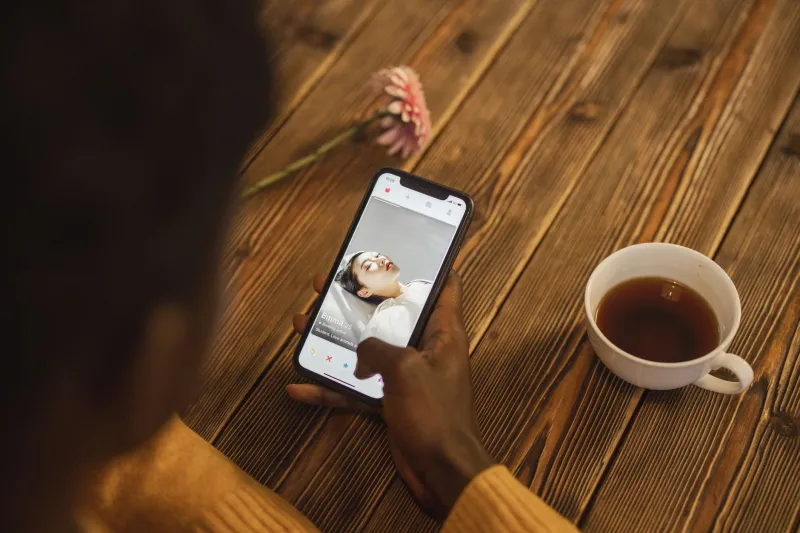
You unmatched. You deleted the number. Maybe you even blocked them on Instagram just to be thorough. It felt decisive, clean — like drawing a line in the digital sand. Then, six months later, there they are again. Same face. Different haircut. Popping up in your queue like the universe forgot to read your notes.
This isn't a glitch. It's not even that unusual. And weirdly enough, there's a whole lot of psychology — and platform mechanics — that explains exactly why it keeps happening.
The Illusion of a Permanent Exit
When we unmatch someone on a dating app, our brain registers it as a conclusion. Done. Resolved. Filed away. But the digital world doesn't really work in neat endings the way we want it to. Unlike blocking someone's number in real life — which effectively cuts off a communication channel forever — unmatching on most dating platforms just removes the conversation thread. It doesn't erase either person from the app's ecosystem.
Both of you are still out there, swiping, updating photos, tweaking bios. The algorithm is still running. And if your geographic radius, age preferences, and activity windows overlap, the math will eventually put you back in each other's queues. It's not fate. It's just data.
That said, the emotional experience of seeing that person again? That's where things get genuinely interesting.
Why We Regret the Unmatch More Than We Admit
Here's something nobody really talks about: unmatching often feels more final to the person doing it than it actually is — and that gap between perceived permanence and actual impermanence creates a quiet kind of cognitive dissonance.
You unmatched because the conversation fizzled, or they said something slightly off, or you were just having a bad week and wanted a clean slate. But months later, when you see them again, you're not remembering the awkward exchange. You're remembering the spark that made you swipe right in the first place. Human memory is notoriously selective, and when it comes to romantic potential, we tend to remember the highlight reel.
Psychologists call this "rosy retrospection" — the tendency to view past experiences more positively over time. Applied to dating apps, it means the person you unmatched at week two might look a lot more appealing at month six, when you've been through three disappointing first dates and two people who never texted back.
The Non-Linear Reality of Digital Dating
Traditional dating narratives are pretty linear: you meet someone, things progress, or they don't. But swiping culture has completely reshuffled that timeline. Connections on dating apps exist in a kind of suspended state — they can go dormant, reappear, restart, and evolve in ways that don't follow any predictable arc.
This is actually one of the more underrated features of the format. Think about it: in any other social context, if you awkwardly walked away from a conversation at a party, you probably wouldn't get a clean-slate second chance with that same person. But on a dating app, both of you might re-enter the same pool after months of personal growth, changed circumstances, or just a better mood — and connect in a way that genuinely works this time.
Some of the most solid couples who met through dating apps didn't match on the first try. They matched, faded, and found each other again when the timing was actually right. The app didn't forget them. The algorithm just waited.
What Blocking Actually Signals (To You, Not Them)
Let's be honest about something: when we block or unmatch someone, it's rarely just about them. It's often about where we are. Overwhelmed by options, burned out on the process, emotionally unavailable, or just needing a reset — the unmatch is frequently less of a verdict on the other person and more of a pressure valve for ourselves.
That's worth sitting with. Because if the impulse to cut someone off is mostly about your own headspace, then it makes total sense that you'd see them differently once that headspace shifts. You didn't actually close a door on them. You closed a door on a version of yourself that wasn't ready.
And when you're ready again? The algorithm doesn't know or care about your previous state of mind. It just shows you people who match your criteria. Including that person.
So What Do You Do When They Show Up Again?
First, resist the urge to make it weird in your head. Seeing a previous unmatch in your queue isn't a sign, a test, or a cosmic joke. It's just the platform doing its job.
Second, give yourself permission to actually think about it. Ask yourself why you unmatched in the first place. Was it something concrete — a genuine incompatibility, a red flag, a conversation that went somewhere uncomfortable? Or was it more ambient — timing, mood, overwhelm? Those are very different situations, and they deserve different responses.
If it was a real incompatibility, trust that instinct. A second look doesn't obligate you to a second chance.
But if it was more about circumstance? Swiping right again isn't desperate or contradictory. It's actually kind of self-aware. You're acknowledging that you're a different person than you were six months ago, and so might they be. That's not weakness. That's growth.
The Bigger Lesson About Digital Connections
What the unmatch paradox really reveals is something worth internalizing before your next swiping session: online dating is not a one-shot game. The permanence we project onto our digital decisions is largely a story we tell ourselves to feel in control of an inherently unpredictable process.
People cycle in and out of apps. They update their profiles, reset their accounts, change their search radius. They grow, they get over someone, they decide they're actually ready this time. And the platforms just keep running their matching logic, indifferent to whatever emotional significance we've attached to a previous interaction.
That's not a flaw in the system. It might actually be the feature we're all quietly grateful for — even if we'd never admit it while we're doing the blocking.
So the next time someone you thought you'd left behind shows up in your queue again, take a breath before you auto-swipe. You might be looking at a dead end. Or you might be looking at a second chapter that's actually better than the first one would have been.
The app doesn't know the difference. But you might.